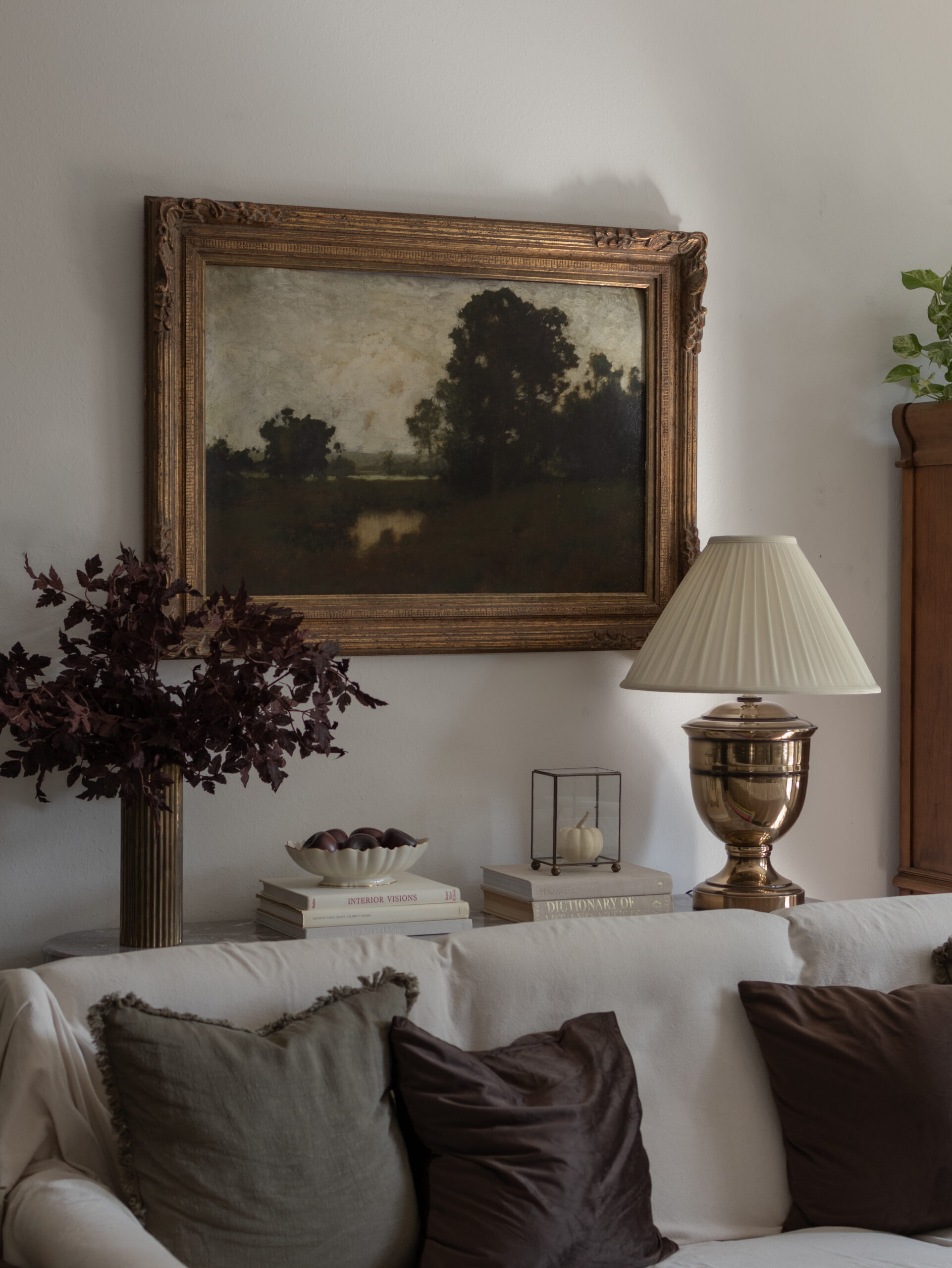
There’s something special about a home that feels layered with time. The most beautiful homes are the ones that tell a story. A mix of new and old, polished and worn, all living together in quiet harmony.
But here’s the truth no one talks about: mixing old and new decor can go wrong fast. One too many collected treasures and suddenly your home feels like a thrift store aisle instead of a curated haven.
I learned that lesson early on when I first started collecting vintage pieces. I’d find a great mirror here, a brass candlestick there, and before long, every corner felt busy. It wasn’t until I started giving my favorite pieces space to breathe that my home finally started to feel calm and intentional.
If you love vintage pieces but crave a home that feels intentional, not chaotic, this post is for you. Today we’ll walk through how to mix vintage and new decor beautifully, so your home feels cohesive, balanced, and deeply personal.
A home that feels layered with time is one that’s been lived in with intention, not rushed into perfection.
1. Start With a Clear Foundation

Before you bring in a single piece, get clear on what feeling you want the room to have. Are you going for warm and moody? Light and airy? Collected and traditional? Your foundation (walls, flooring, trim, and lighting) should support that mood.
Think of your foundation as the canvas. Neutral paint, timeless flooring, and classic architectural details let your furniture and accessories do the storytelling. If everything in a space is competing for attention, nothing stands out.
Try This:
- Keep walls neutral to let vintage textures shine.
- Choose simple window treatments that don’t fight for attention.
- Use consistent metals or wood tones throughout to create unity.
My go-to warm white is Sherwin Williams “Alabaster”. It’s soft and creamy enough to complement antiques but crisp enough for modern pieces.
2. Balance Old and New by Scale and Weight

A balanced room has variety, not just in age, but in scale and visual weight. If all your pieces are petite and detailed, the room feels busy. If they’re all sleek and modern, it feels sterile. You need contrast.
Try pairing a vintage wood dresser (heavy, grounded) with a modern mirror (light, simple). Or set a modern sofa beside a vintage trunk. It’s that push and pull that creates depth.
Design Tip: If you’re ever unsure, think “opposites attract.”
Old wood? Pair it with new glass.
Chunky antique? Balance it with a light-lined lamp.
Curvy vintage chair? Offset it with a modern, straight-edged side table.
The magic of mixing eras lives in contrast.
3. Repeat Elements to Create Cohesion
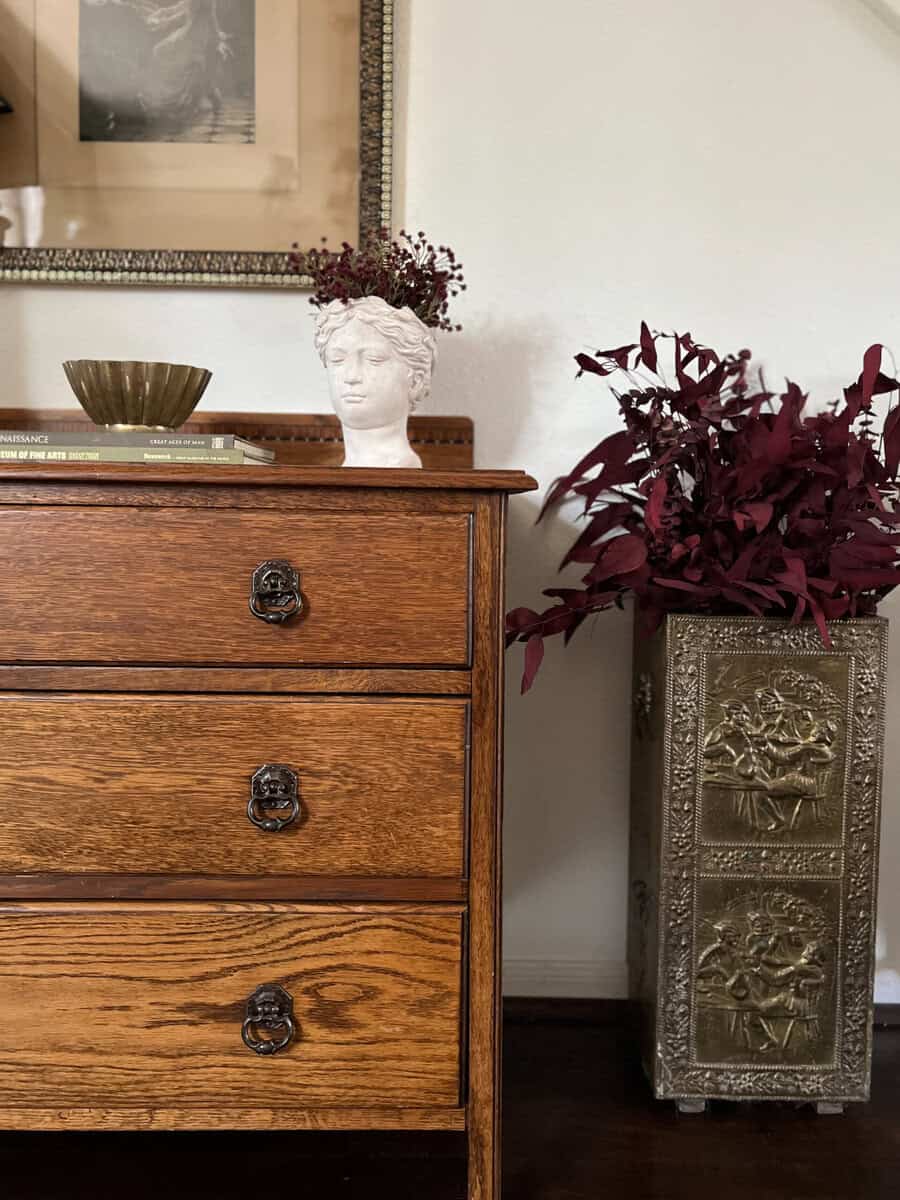
Here’s the secret to keeping an eclectic mix from feeling chaotic: repeat something. That could be a color, a finish, a shape, or a texture. Even subtle repetition helps the eye rest.
For example:
- A brass frame echoes a brass floor lamp.
- A warm wood tone repeats in the legs of a chair and a bowl on the coffee table.
- A curved mirror mimics the shape of a vintage armchair.
Repetition is what turns a collected look into a cohesive one.
Try This:
When you introduce a vintage piece, look around the room and ask: Where else can I echo this tone, texture, or shape? Even one or two repeats can make a room feel thoughtfully designed.
4. Let Your Vintage Pieces Be the Star (Not the Clutter)

It’s easy to get carried away with vintage finds. Trust me, I’ve done it. You bring home a beautiful brass candlestick, then a ceramic vase, then another mirror “for layering,” and suddenly every surface is full.
The secret? Give your favorite pieces room to breathe.
Negative space is what lets each item shine. You don’t need every wall filled or every shelf styled. In fact, restraint makes the vintage stand out even more.
Try This:
- Style shelves with ⅓ decor, ⅔ open space.
- Group similar items in odd numbers (like threes).
- Limit each surface to one or two visual “moments.”
You don’t have to display everything you love at once. Rotation keeps your home and your style feeling fresh.
5. Mix Textures for Depth and Comfort
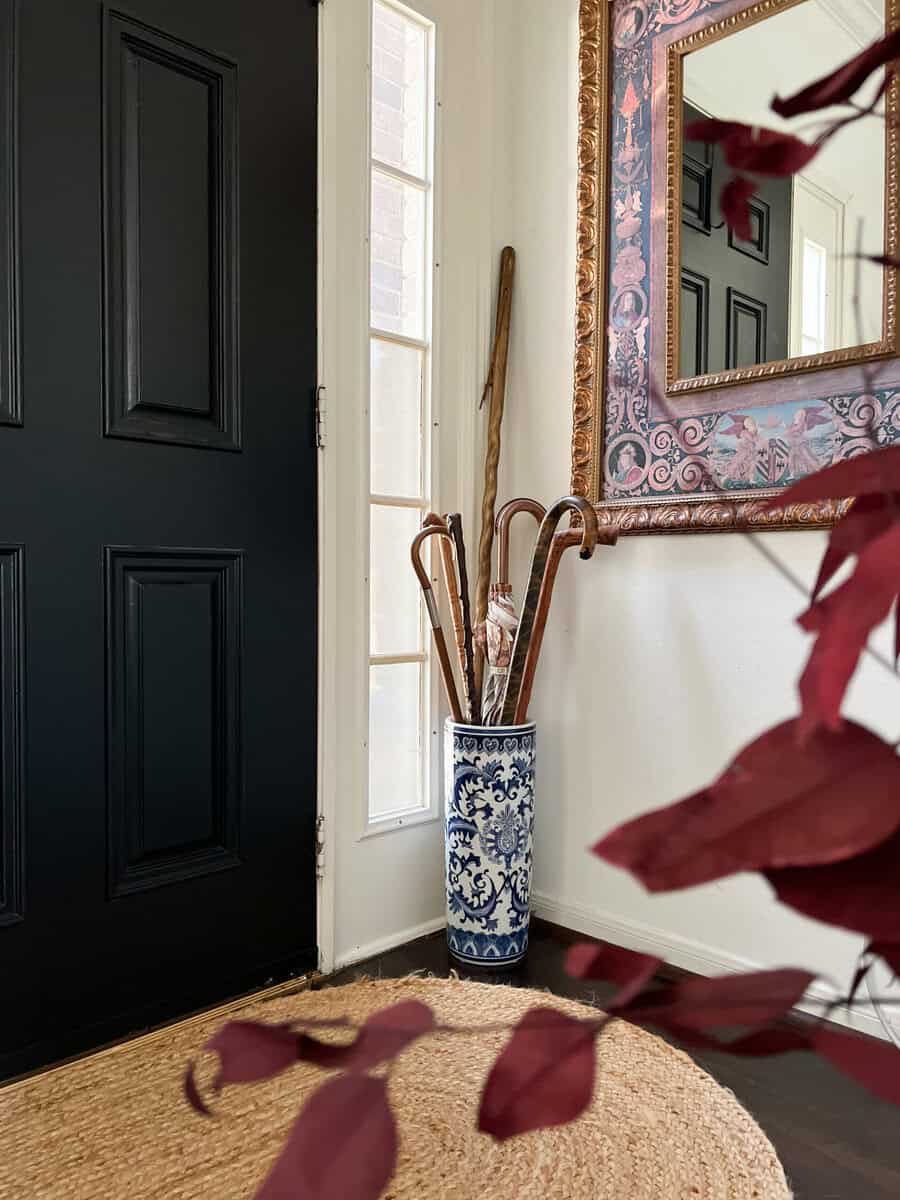
Texture brings soul to a room. When you blend smooth and rough, shiny and matte, old and new, you add visual warmth.
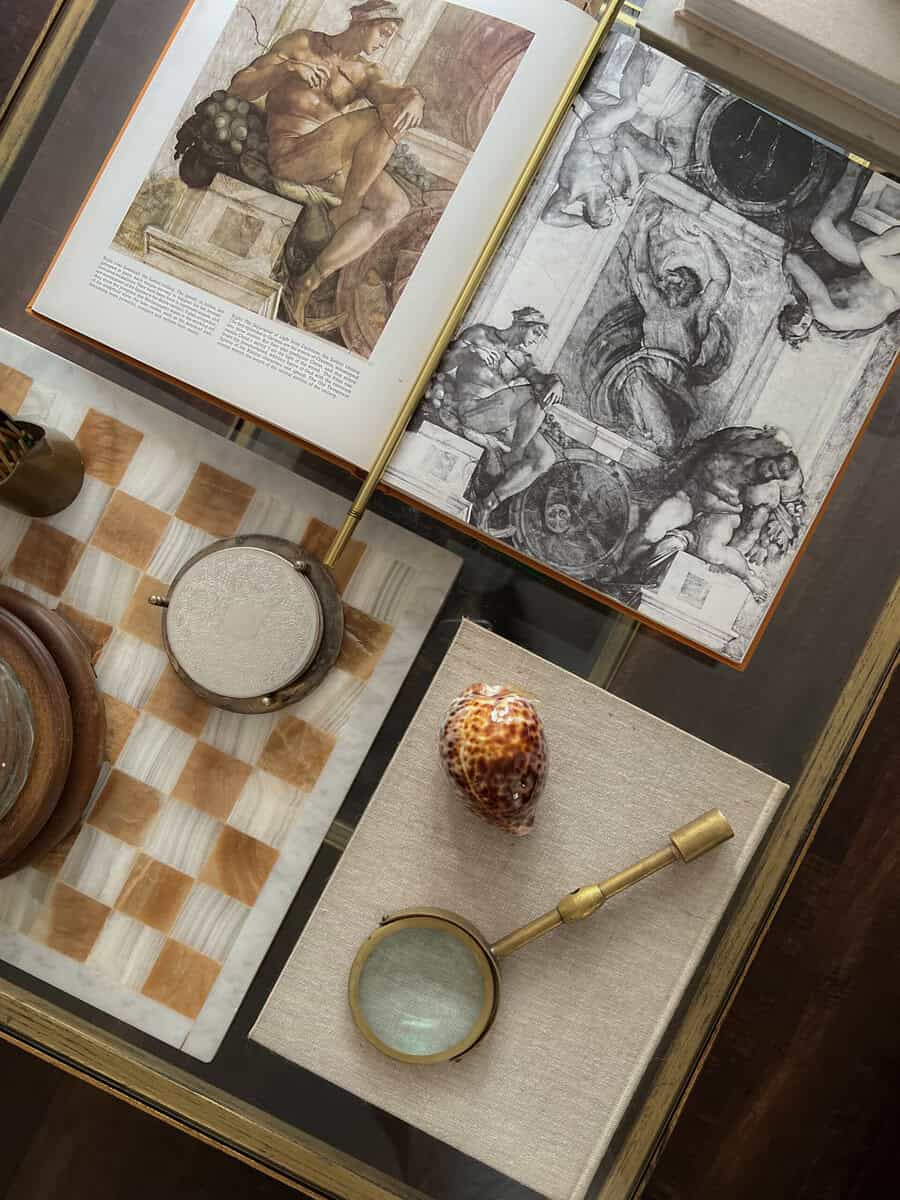
A vintage wood sideboard paired with a crisp linen runner. A sleek modern vase next to a stack of worn books. A smooth marble tabletop beside a chunky knit throw. That’s what makes a space feel collected, not cold.
Layer With Intention:
- Wood + stone = organic warmth.
- Linen + ceramic = softness meets sturdiness.
- Metal + glass = clean, timeless contrast.
Texture tells the story that color alone never can.
6. Keep Color Palettes Grounded and Simple
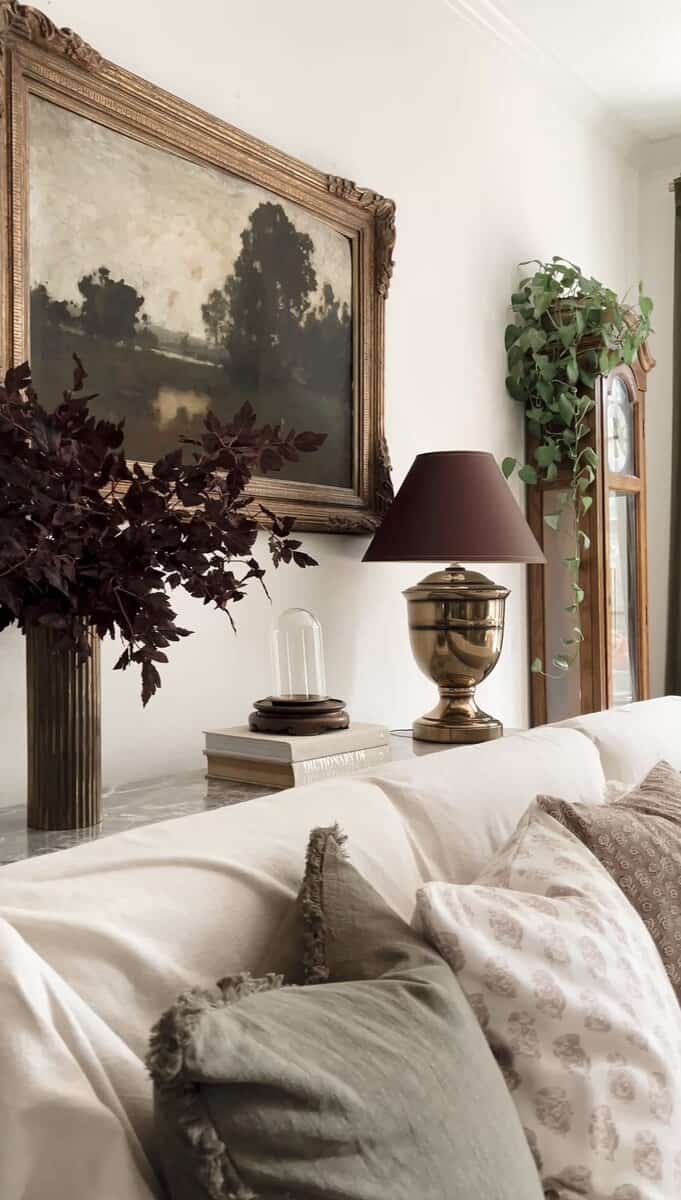
The best way to keep your home from looking cluttered? Stick to a cohesive color story.
That doesn’t mean everything has to match, but each piece should feel like it belongs in the same family. Start with a base (neutrals or muted tones), then add layers of warmth through wood, brass, textiles, and art.
If you love bold color, limit it to one or two accents so it feels intentional.
Try This:
- Keep large pieces (sofas, rugs, walls) in your base palette.
- Layer warmth through accents like pillows, art, and lighting.
- Mix materials, not color chaos.
7. Anchor Every Space With Something Modern

If your home leans vintage-heavy, balance it with one clean-lined anchor.
Modern pieces act like palette cleansers. They stop your vintage from feeling fussy. Think of them as resting points for the eye.
Try adding:
- A modern lamp or mirror with clean geometry.
- A simple slipcovered sofa in a classic silhouette.
- A streamlined coffee table or metal-framed side table.
This contrast makes your antiques look more intentional, like part of a story, not a collection.
8. Don’t Overstyle, Curate

Slow decorating teaches patience and that’s especially true when mixing old and new. It’s tempting to rush toward a “finished” look, but the best homes evolve over time. Let your spaces breathe between updates.
My home is always evolving. I’ll swap a lamp, move a chair, or rethink a gallery wall, then live with it for a few weeks before making another change. The slower I go, the more it feels like my home is growing with me, not just getting redecorated.
Rotate pieces seasonally. Move your favorite finds from one room to another. Edit shelves every few months. That constant, thoughtful evolution keeps your home feeling fresh and lived-in, never cluttered or staged.
Curating your home is an ongoing conversation, not a one-time decision.
9. Add Personality Through Imperfection

Vintage pieces often come with scratches, dings, and fading, and that’s part of their charm. Mixing in something perfectly new beside something imperfectly aged makes the whole space feel grounded and real.
Don’t try to hide every imperfection. Instead, let it soften the edges of newer pieces. That’s where the warmth comes from.
Try This:
- Display a weathered mirror beside a sleek console.
- Keep patina on brass rather than polishing.
- Pair aged wood with smooth ceramics.
10. Style With Feeling, Not Rules
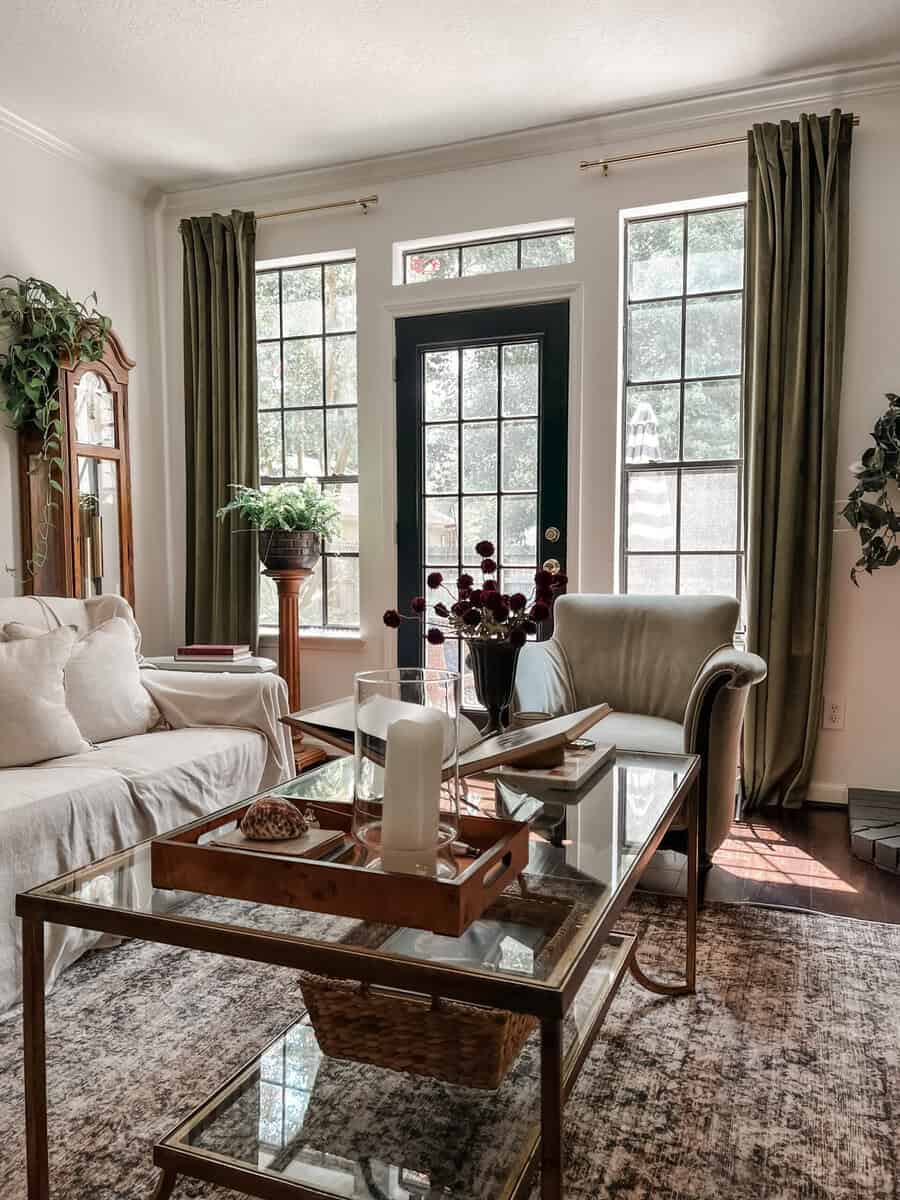
At the end of the day, your home should feel like you. Not like a Pinterest board, not like a catalog spread, like you.
If a piece makes you smile, it belongs. If a combination feels balanced to your eye, it’s right. Rules are helpful, but intuition builds the most meaningful spaces.
Your home doesn’t need to follow design rules. It needs to follow your rhythm.
When you blend vintage and new intentionally, you create something that can’t be bought in a single shopping trip. You create a home that’s lived into. Mixing old and new isn’t about design perfection. It’s about honoring history while making space for your present life.
The best homes are never finished. They just get better with time. So keep collecting, layering, and curating. Just remember to pause long enough to enjoy what you’ve already created.